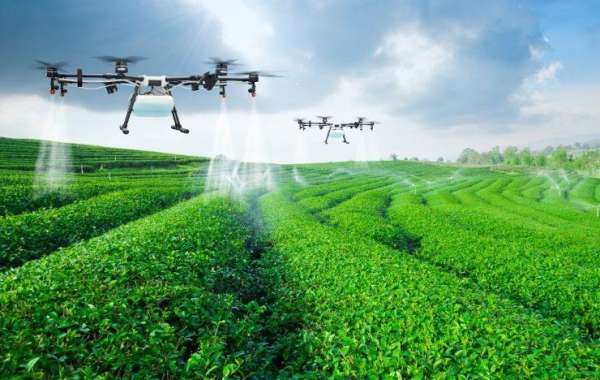
The competitive landscape of digital agriculture presents a diverse ecosystem of technology providers ranging from agricultural equipment manufacturers to software specialists and emerging startups revolutionizing farm operations. The Digital Agriculture Market Share distribution reflects the varied approaches companies take when developing and delivering solutions to farming communities worldwide. Major agricultural equipment manufacturers including John Deere, CNH Industrial, and AGCO have established significant market positions through integration of digital capabilities with their machinery offerings, creating comprehensive connected farming ecosystems. These established players leverage existing dealer networks, farmer relationships, and equipment platforms to deploy digital solutions as value-added components of their broader offerings. However, specialized technology companies focusing exclusively on agricultural software and analytics have captured substantial market segments through deeper functionality and innovative approaches to specific farming challenges. The Digital Agriculture Market size is projected to grow USD 16.55 Billion by 2035, exhibiting a CAGR of 5.14% during the forecast period 2025-2035. This growth has attracted significant venture capital and strategic investment into the agricultural technology space, enabling innovative startups to challenge established players. The market share dynamics are influenced by factors including technology capabilities, geographic coverage, crop and farming system specialization, integration flexibility, and pricing strategies. Organizations evaluate providers based on specific operational requirements, existing equipment infrastructure, and strategic priorities for digital transformation. Cloud-based solutions have gained considerable market share as farmers prioritize accessibility, scalability, and reduced infrastructure requirements. The subscription-based pricing models prevalent in agricultural software have lowered adoption barriers while creating sustainable revenue streams for vendors committed to continuous platform improvement.
Market share analysis reveals distinct segments within the overall digital agriculture landscape, each characterized by unique competitive dynamics and leading vendors serving specialized needs. Precision agriculture hardware including GPS guidance systems, variable rate application equipment, and automated steering represents a mature segment dominated by major equipment manufacturers. Farm management software platforms constitute a rapidly growing segment with diverse vendors offering solutions ranging from basic record-keeping to comprehensive enterprise resource planning for agricultural operations. Remote sensing and imagery services represent another significant category, with satellite providers, drone companies, and imagery analytics firms competing for farmer attention through differentiated insights delivery. Soil and crop monitoring solutions encompassing sensors, sampling services, and analytics platforms address fundamental agronomic decision-making requirements. Livestock monitoring and management represents a specialized segment with technologies for health monitoring, breeding optimization, and production management. Supply chain and traceability solutions address growing demands for transparency and verification throughout agricultural value chains from production to consumption. Weather and climate services provide essential forecasting and historical analysis supporting agricultural planning and risk management decisions. Financial and insurance technology applications are emerging to serve agricultural lending, crop insurance, and risk management needs. The integration of artificial intelligence capabilities has become a key differentiator, with vendors investing in predictive analytics and recommendation engines. Market share shifts are occurring as farmers increasingly prefer integrated platforms that consolidate multiple digital agriculture capabilities rather than managing numerous disconnected point solutions. Customer retention and expansion significantly influence market share dynamics in subscription-based business models where satisfied customers drive recurring revenue growth.
Geographical market share distribution reveals regional variations in vendor preferences and competitive positioning influenced by agricultural practices and market characteristics. North American markets demonstrate strong positions for established equipment manufacturers who have integrated digital capabilities alongside specialized software providers addressing specific crop and farming system requirements. Regional dealer networks and farmer relationships create competitive advantages for vendors with established distribution infrastructure. European markets show distinctive preferences influenced by regulatory requirements regarding data privacy, environmental compliance, and agricultural policy frameworks. Local and regional vendors have leveraged understanding of European agricultural contexts to compete effectively with global players. Asia-Pacific markets present complex dynamics with global technology providers competing alongside regional champions and government-backed initiatives promoting domestic agricultural technology development. The China market has developed distinctive characteristics with local vendors addressing specific requirements and preferences while government initiatives shape market development direction. India represents significant opportunity given the massive agricultural population, though market share capture requires solutions appropriate for smallholder contexts. Latin American markets favor providers offering solutions optimized for large-scale commodity crop production typical of regional agricultural systems. Middle Eastern and African markets present emerging opportunities for vendors establishing early market presence through appropriate solutions for diverse regional agricultural contexts. The competitive landscape continues evolving through mergers and acquisitions creating larger entities capable of comprehensive solution delivery and global reach. Strategic partnerships between equipment manufacturers and technology specialists enable combined offerings that leverage complementary strengths. Market share concentration metrics indicate a moderately fragmented landscape with continued opportunities for innovative challengers addressing underserved needs.
Future market share evolution will be influenced by several emerging factors and competitive dynamics reshaping the digital agriculture landscape. The integration of generative artificial intelligence capabilities represents significant opportunity for vendors to differentiate through enhanced analytical insights and automated recommendation systems. Organizations are increasingly evaluating vendors based on innovation trajectories and ability to incorporate emerging technologies rapidly into practical agricultural applications. Platform ecosystem strategies including developer programs, marketplace offerings, and third-party integrations will influence market share as farmers value extensibility and customization options. Data ownership, portability, and interoperability policies will increasingly influence purchasing decisions and competitive positioning as farmers become more sophisticated regarding data rights. The ability to serve diverse farm sizes and types will determine market share potential, with solutions scalable from smallholder operations to large commercial enterprises capturing broader markets. Security and privacy capabilities will increasingly influence purchasing decisions as agricultural operations become more connected and data becomes more valuable. Customer success metrics including implementation effectiveness, user adoption rates, and demonstrated agricultural outcomes will become more important evaluation criteria. The convergence of digital agriculture with adjacent domains including food processing, distribution, and retail may create new competitive dynamics. Pricing strategy evolution including usage-based models and outcome-linked arrangements will influence competitive positioning. Vendor financial stability and long-term viability considerations will play greater roles in farmer purchasing decisions, particularly for platforms integral to farm operations. The digital agriculture market will continue presenting opportunities for innovative vendors addressing evolving farmer needs while established players leverage scale and relationships to maintain competitive positions.
Top Trending Reports -
Europe Affective Computing Market Size
GCC Affective Computing Market Size
Germany Affective Computing Market Size